Trilling Harmonics on the Cello
In this blog, I’ll be going over the various ways that you can trill harmonics on the cello. Much of this translates to the other instruments in the string family, but each instrument has their own unique considerations, which I may get to in a future post.
Now, you know trills as a fast alternation between two notes. Right? This is the traditional definition of a trill. But what if you take that concept and apply it to harmonics?
A harmonic is basically just a point on the string that you lightly touch and play with the bow to get a note other than the open string. I'm going to give you eight ways that you can trill harmonics on the cello.
1st Way: Trilling Natural Harmonics on One String
If you pick two harmonic nodes on the string and trill between them, you'll get this:
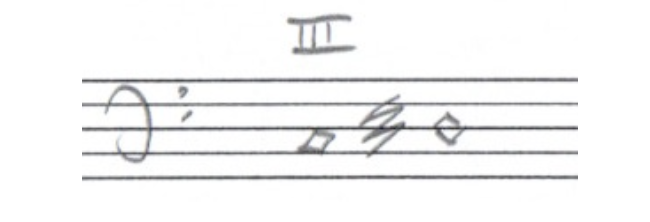
The interesting thing is that if you choose two different points than the ones in the audio, you'll end up with what's called a multiphonic.
A multiphonic is when you cause multiple harmonics to sound simultaneously. For example, in the next audio clip, on the G-string I play the 5th partial, which is a major third above the open string and trill it with the 3rd partial, a perfect 5th above the string.
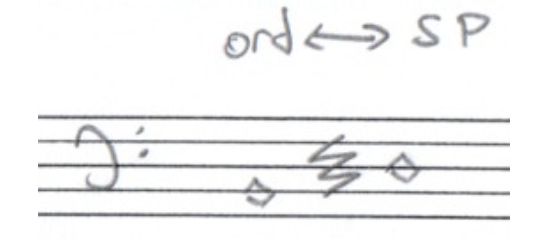
As my contact point changes, or where the bow meets the string, you're actually encouraging other harmonics than the ones that I'm playing with the left hand to sound. The reason is because those harmonics exist at some point overlapping or nearby with the ones that I'm playing with the left hand.
In this case, you’ll notice that in addition to the 3rd and 5th partial, the 9th partial also starts to resonate pretty strongly. This is because one of the nodes for the 9th partial overlaps with the 3rd partial. As the bow gets closer to the bridge, it’s more likely that the higher multiples or whatever harmonic being played will sound. It’s not a guarantee, of course, as the 10th partial (multiple of the 5th) isn’t resonating at an equal volume to the 9th.
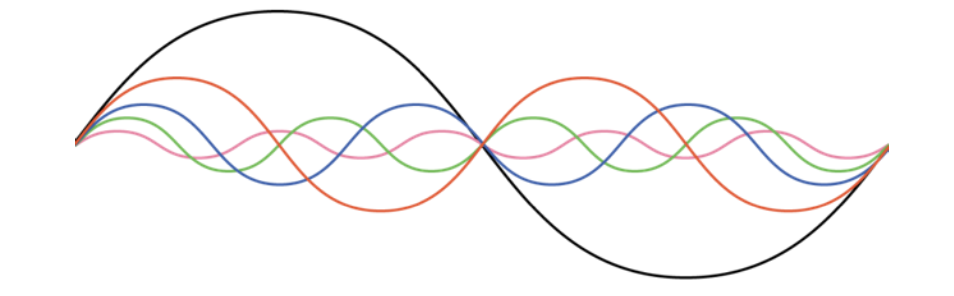
Let’s break down the numbers to understand why the 9th partial does sound—or at least part of the explanation. 9 is a multiple of 3, so since the nodes for the 9th partial divide the string into 9 equal parts, some of them will naturally coincide with the 3rd or 6th partials. For a labeled visualization of this, see this chart over all cellomap.com.
In the graphic below, you can see how certain waves intersect with each other. When you introduce a small percentage of instability, like with a trill in the left hand or changing contact point (where the bow meets the string) in the right hand, multiphonics emerge naturally.
What happens if we take this concept and apply it to two strings?
2nd Way: Trilling Natural Harmonics on Two Strings, Fingers Synced
That leads me to the second method, which is to do a trill between two harmonics on two adjacent strings. It sounds like this:
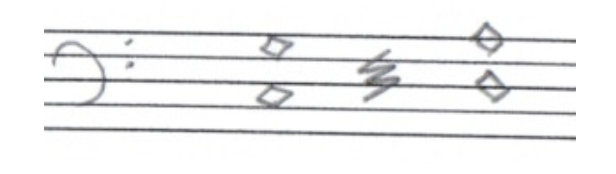
So basically the principle is the same, but you're just adding another layer with the string above or below where you started, in this case a fifth higher. It's easiest to do this in fifths because you're able to quickly move between different fingers. If you were to try a different interval, it would get way slower. For example, if I tried trilling sixths:
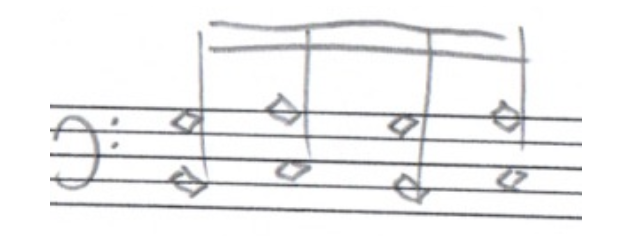
Your hands are much more restricted by the double stop. Keep that in mind when you're composing for the cello if you're going to use these kinds of harmonic trills.
3rd Way: Trilling Natural Harmonics on Two Strings, Fingers Not Synced
The 3rd method sort of comes out of the second one where you tweak it just a little bit by moving the fingers at different times, and you can still play between adjacent strings. In this case I'm trilling with the open strings. Here’s an audio sample:
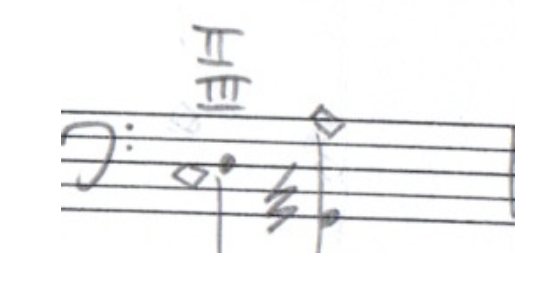
4th Way: Trilling Artificial Harmonics on Two Strings in Thumb Position, Fingers Synced
The 4th method is to trill artificial harmonics in thumb position, where the fingers are synchronized. Again, in this case, the easiest interval to play with the thumb is a 5th because any other interval would drastically decrease mobility.
So, you just touch lightly a point above the string that's a harmonic. For example, in the audio sample, you could touch a fourth above the string and trill the fingers so that they're moving at the same time.
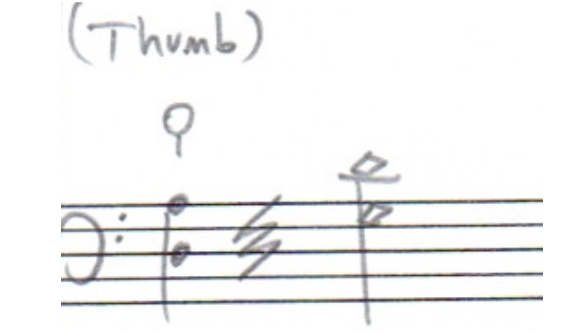
You could also play different intervals with the trilling fingers. Here’s a sample of that:
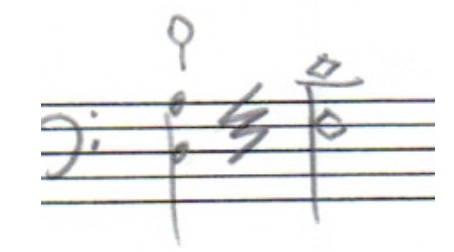
Notice that in this case, the trill is significantly slower.
5th Way: Trilling Artificial Harmonics on Two Strings in Thumb Position, Fingers Synced
The 5th way is to go into thumb position and trill the fingers at different times. Here’s an audio sample:
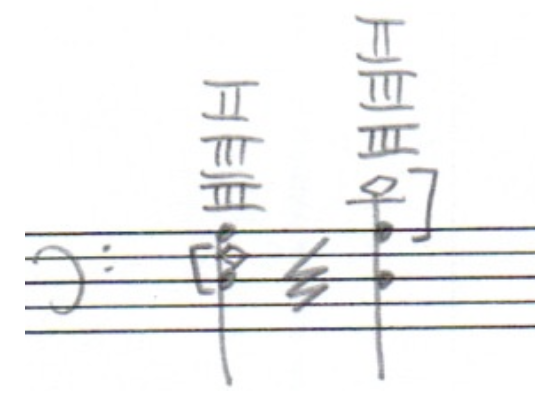
6th Way: Trilling Natural Harmonics on Two Strings in Counterpoint
Another thing that you can do is to trill in counterpoint. This is what I've done in my own music, in my cello solo, Metasomatic: Bifurcations. Here’s the piece if you're interested in listening to it:
That piece also makes use of a scordatura tuning, which is a whole other topic.
In the recording below, my cello is tuned in standard tuning, but you can still apply the same principle where you take specific harmonics and play them in counterpoint with others.
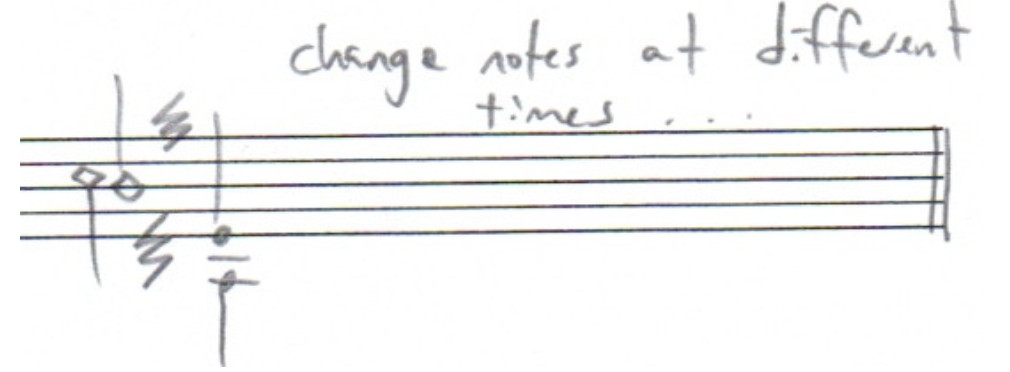
7th Way: Natural Harmonics on Two Non-Adacent Strings
The seventh way is to play harmonics on non-adjacent strings.
I know what you're thinking. You're probably like, “well, how is that even possible?! The bridge is round. You cannot physically play two strings that are not adjacent at once!!”
But there actually is one specific way that you can, and it's by pushing down the middle string and playing verysul tasto so you can actually play two non-adjacent strings. In this case I'm playing the G and A strings at once:
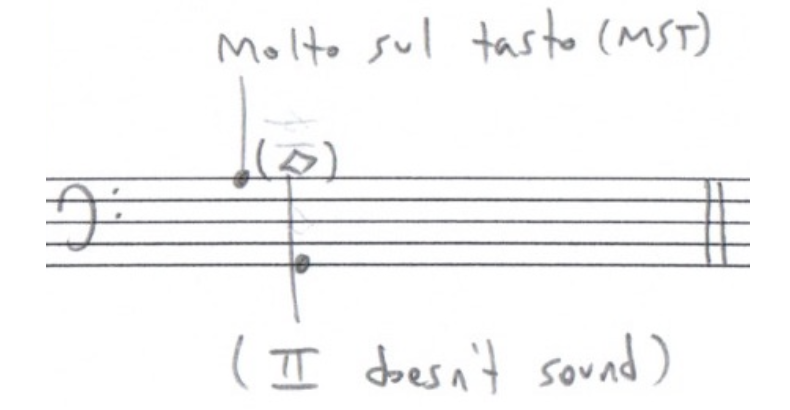
This technique only works if the D string (or the G string if you’re trying to play the C and D strings simultaneously) is pushed down enough to allow for these two strings to be bowed.
Here’s a close up:
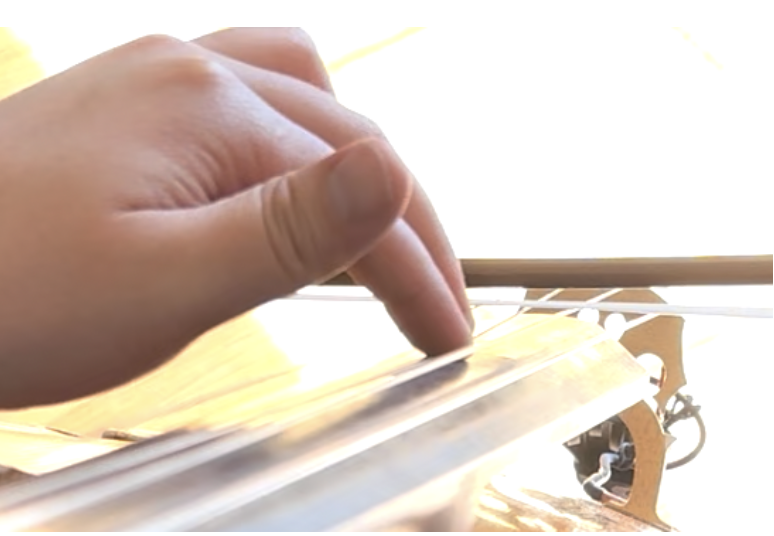
As you can see, the D string is being pushed down so that there's space for the bow to play the G and A without touching the D string.
One thing to notice is that as the bow starts to move down at a certain point, all three strings are going to be on the same plane, so you would bow three strings at once. That might actually be desirable in some cases! And so what you can do is you can start building chords. One of the ways that I do this in my own music is by playing a note on the D string that's fully depressed. In this case, I'm playing B-flat and then I'm playing a fifth above the open G and A strings:
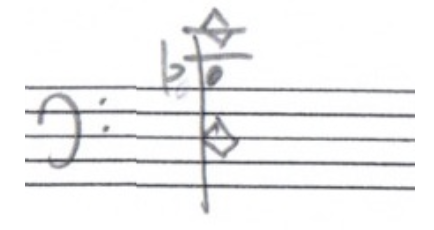
It's super idiomatic and comfortable for the hand.
I would only do this if you're a cellist or you're working very closely with one, so you can figure out all of the different ways that you can actually make this work, because there's one specific malfunction that's going to happen if you use this technique, and that's certain contact points are not going to work with certain harmonics.
Let me demonstrate as I sweep through different contact points. In this audio example, I'm going to play the third partial, which is a fifth above the open G-string.
You notice in the audio, that at a certain point, that harmonic harmonic does not sound. Or if it does, it's extremely faint, and what sort of overtakes the sound is noise. It's like a dead spot for that node. Every harmonic has specific places on the string where they're able to actually vibrate. So, if you intersect with one of the waves, it cancels it out, and you're not able to actually hear it.
8th Way: Trilling Natural Harmonics and Artificial Harmonics Simultaneously
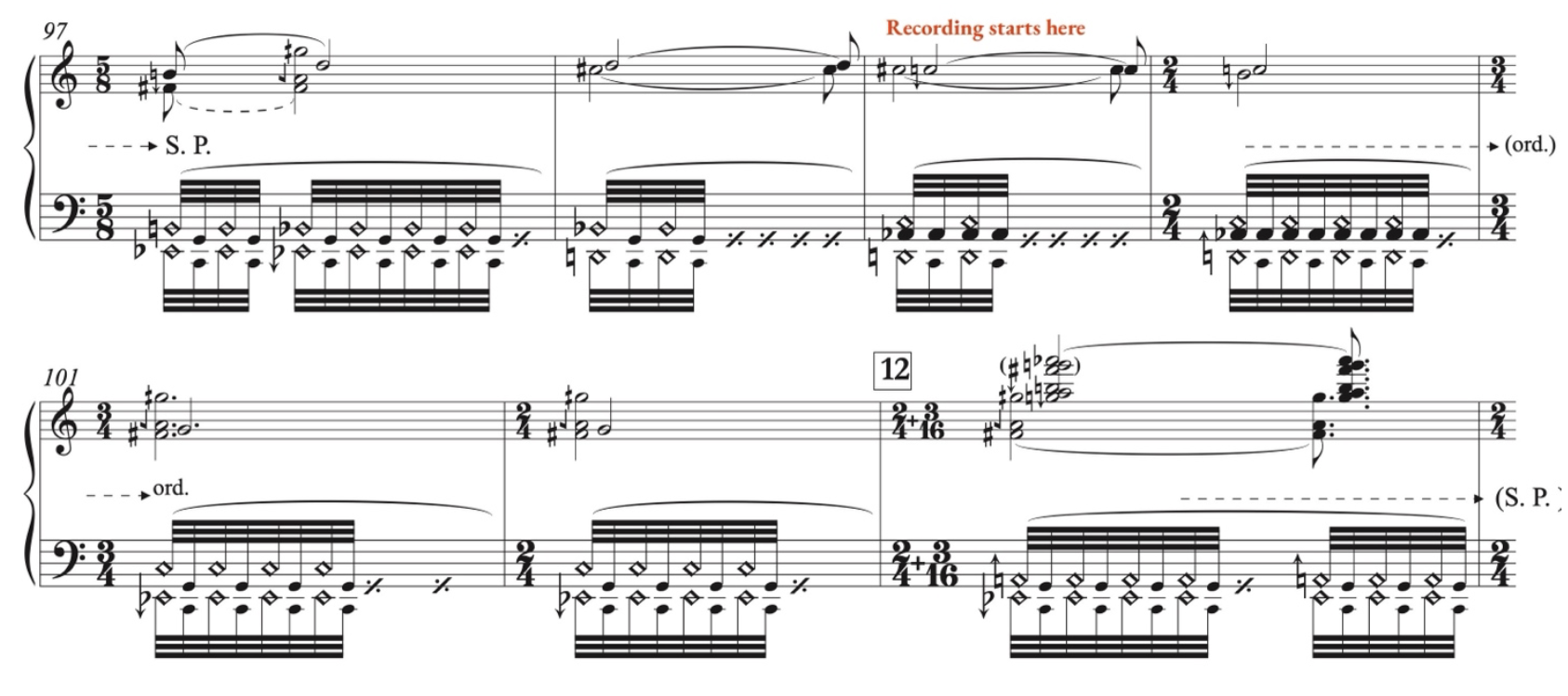
The 8th way is to trill artificial harmonics on one string and natural harmonics on the other! I do this in my second string quartet. You can find the recording for it here:
You can play either of these combinations:
Natural Harmonics Above - Artificial Harmonics Below
Artificial Harmonics Above - Natural Harmonics Below
The only main consideration is depending on where the artificial harmonic is, some intervals may not be possible. If in normal position (not thumb position) in the first octave of any given string the hand will be restricted to intervals that can be reached within a major third at the most. As intervals get closer as you ascend up the neck, there are more possibilities. Imagine how a guitar has frets that get closer and closer together the higher they get. Same on the cello! Or any instrument with strings, for that matter.
Here's a recording sample and a notation sample:
I hope this guide was helpful. Check out the video here:
____
If you'd like to support more writing like this, you can buy me a coffee. Thank you!